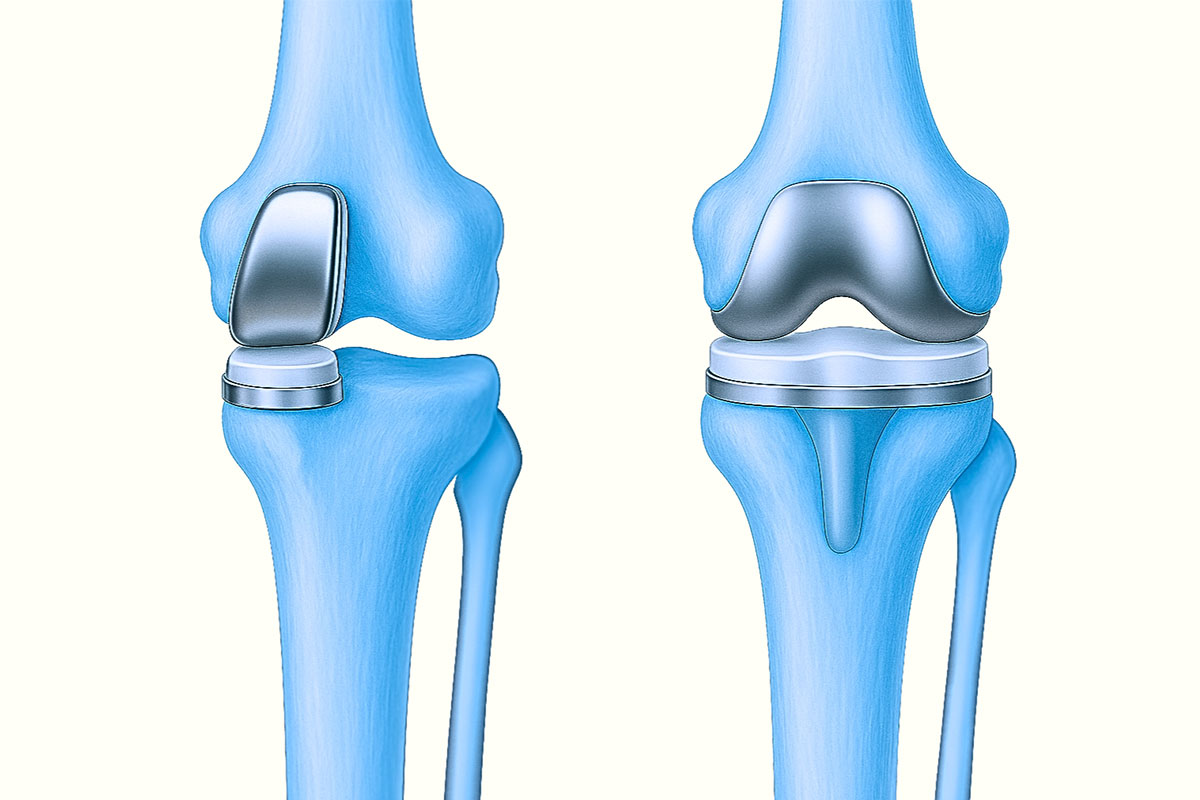
Knee replacement surgery is one of the most successful operations in orthopaedics, used to relieve pain and stiffness from arthritis or joint damage. The aim is to restore movement, reduce pain, and improve quality of life. Depending on how much of the knee is affected, different types of replacement may be suitable:
Also called “unicompartmental knee replacement,” this procedure replaces only the damaged part of the knee (usually the inner or outer side). The healthy bone, cartilage, and ligaments are preserved.
This is the most common type of knee replacement. The worn-out joint surfaces at the end of the femur (thigh bone) and tibia (shin bone) are replaced with smooth, durable implants, and the underside of the kneecap may also be resurfaced.
In some patients, arthritis mainly affects the joint between the kneecap (patella) and the groove it moves in (the femoral trochlea). A patellofemoral replacement resurfaces just this part of the knee.
Thanks to modern implants and enhanced recovery pathways, most patients are walking on the day of surgery and return home within 0–1 day. Tailored physiotherapy helps you regain strength and confidence, allowing you to return to walking, exercise, and daily life with much less pain.
Walk confidently again with advanced implants and tailored rehabilitation.
Most patients are up and walking the same day, home the same day or after 1 night.
Modern implants are designed to last 15–20 years or more.
You can usually drive after 4–6 weeks, provided you can control the car safely and are no longer taking strong painkillers. You should also check with your insurance company.
This depends on your job. Office-based workers may return in 4–6 weeks. Manual or physically demanding roles may require 8–12 weeks or longer.
Some patients can kneel comfortably, while others find it difficult. It varies from person to person and does not affect the overall success of the replacement.
Modern implants are designed to last 15–20 years or more. Outcomes are best if you keep active, maintain a healthy weight, and follow rehabilitation guidance.
Most patients return to walking, swimming, cycling, golf, and low-impact exercise. High-impact sports (running, jumping, contact sports) are not recommended, but many people enjoy an active lifestyle with their new knee.

Level 8 Orthopaedics, RVI, Newcastle, NE1 4LP
Nuffield Health Newcastle, Clayton Road, Jesmond NE2 1JP