

PRP injections for knee and hip arthritis: how they work and who may benefit
By Mr Philip Dobson, Consultant Orthopaedic Surgeon specialising in knee and hip conditions in Newcastle (Newcastle Hospitals NHS and Nuffield Health).
Platelet-rich plasma (PRP) injections are increasingly used to treat joint pain caused by osteoarthritis, particularly in the knee and hip.
For many patients who wish to remain active but are not yet ready for joint replacement surgery, PRP can be a useful treatment option to reduce pain and improve function.
PRP is part of a modern approach to joint preservation, aiming to improve the environment within the joint rather than simply masking symptoms.
What is PRP?
PRP stands for platelet-rich plasma.
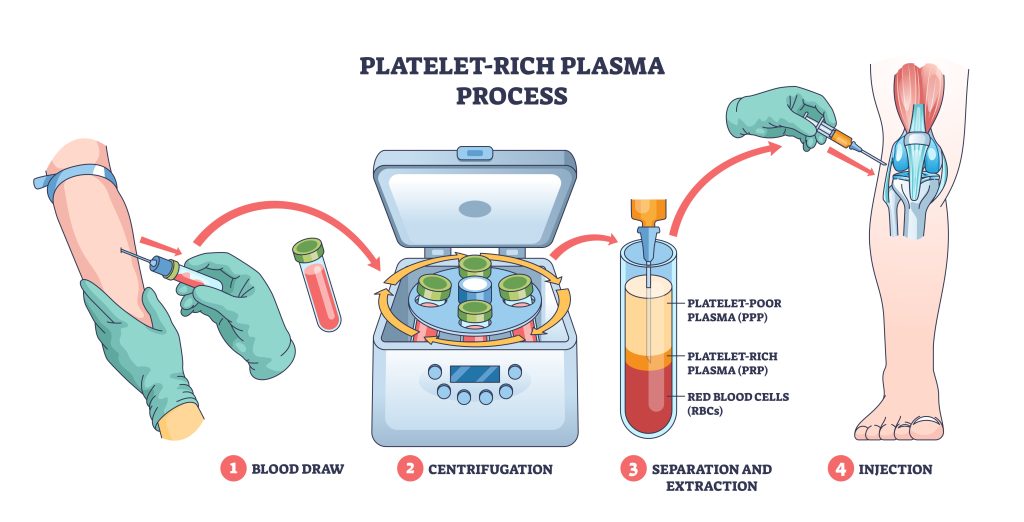
It is produced using a small sample of your own blood. The blood is placed in a centrifuge, which concentrates the platelets into a small volume of plasma.
Platelets contain natural growth factors and signalling proteins that play an important role in regulating inflammation and supporting tissue health.
When injected into an arthritic joint, PRP aims to influence the biological processes within the joint and help improve symptoms.
Because PRP uses your own blood, it is considered a biological treatment rather than a synthetic medication.
How PRP works in arthritis
Osteoarthritis is not simply a “wear and tear” condition. It also involves inflammation within the joint and changes in the surrounding tissues.
PRP works by influencing this joint environment.
Research suggests that PRP may:
- Reduce inflammatory activity within the joint
- Support the health of cartilage and surrounding tissues
- Improve the quality of joint fluid
- Reduce pain and improve joint function
The aim of PRP treatment is therefore to support the joint environment and improve symptoms, rather than simply providing temporary pain relief.
What does the research show?
PRP has been studied extensively in osteoarthritis, particularly in knee arthritis.
Multiple clinical studies have demonstrated improvements in pain and function following PRP injections, especially in patients with mild to moderate arthritis.
Several systematic reviews and clinical trials have also compared PRP with other commonly used injection treatments. These studies have shown encouraging results, with many patients experiencing meaningful symptom improvement.
PRP is now widely used internationally as part of joint preservation strategies in orthopaedic practice.
Who may benefit from PRP?
PRP is most commonly used for patients with:
- Mild to moderate knee arthritis
- Early hip arthritis
- Persistent joint pain despite physiotherapy and activity modification
- Symptoms that interfere with walking, exercise or sport
- A desire to explore non-surgical treatment options
Patients who are younger or who wish to remain active often find PRP particularly appealing, as it uses the body’s own biological mechanisms.
PRP may also be considered for patients who are trying to delay joint replacement surgery.
What happens during a PRP injection?
The procedure is relatively straightforward and usually takes around 30 minutes.
First, a small sample of blood is taken from your arm. This blood is then processed in a centrifuge to concentrate the platelets.
The PRP is then injected into the affected joint.
Most patients are able to go home shortly afterwards and resume normal daily activities.
Some temporary discomfort in the joint for a few days after the injection is not uncommon.
How long does PRP take to work?
PRP does not usually provide immediate pain relief in the same way as steroid injections.
Instead, improvement tends to develop gradually over several weeks as the biological effects of the treatment take place within the joint.
Many patients experience improvement in pain and function over the following months.
The duration of benefit varies between individuals.
Are PRP injections safe?
PRP has an excellent safety profile.
Because the treatment uses your own blood, the risk of allergic reaction is extremely low. Serious complications are rare.
As with any injection, there is a very small risk of infection, although this is uncommon when the procedure is performed using sterile technique.
Is PRP right for everyone?
PRP can be very helpful for selected patients, but it is not suitable for everyone.
Patients with very advanced arthritis may be less likely to benefit, and in some cases hip or knee replacement surgery may be the more appropriate treatment.
A detailed assessment, including examination and imaging where necessary, helps determine whether PRP is likely to be beneficial. You can read more about how PRP compares with steroid injections here.
Specialist assessment
If you are experiencing persistent knee or hip pain, a specialist assessment can help determine the cause of your symptoms and the most appropriate treatment options.
PRP injections can be offered as part of a comprehensive approach to managing knee and hip arthritis, alongside physiotherapy, strengthening and lifestyle measures.
For many patients, this approach can help reduce pain, improve function and maintain an active lifestyle.
Mr Philip Dobson, Consultant Orthopaedic Surgeon offers consultations and treatment at Nuffield Health Newcastle